
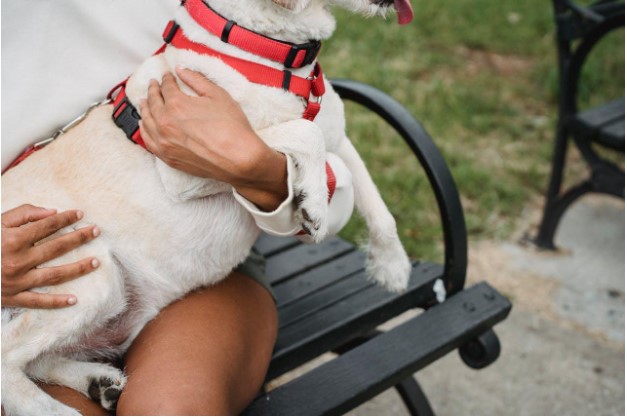
It can feel confusing when your enthusiastic pup suddenly puts on the brakes at the sight of a harness. You know that walking with a harness is often safer and more comfortable than a collar, but your dog seems to disagree entirely.
This hesitation is common, and many pet parents find themselves holding a piece of equipment their dog treats like a scary monster. Rushing the process usually backfires and creates more anxiety for everyone involved.
The goal is to change how your dog feels about the equipment and turn it from something suspicious into a signal that good things are about to happen.
Select the Ideal Harness
Not all gear is created equal. A bulky, heavy item might overwhelm a small dog, while a flimsy one might chafe a larger breed. When shopping for a dog harness, look for padded options that won’t rub against sensitive skin.
Consider styles that don’t require pulling anything over the dog’s head if that seems to be a trigger. Step-in designs can be a lifesaver for head-shy dogs. Getting the fit right is also non-negotiable; too tight and it hurts, too loose and it slides around unnervingly.
Gradual Introduction is Everything
Throwing the gear on immediately is a recipe for failure. Instead, just place it on the floor. Let your dog sniff it at their own pace. When they show interest or even look at it, drop a high-value treat nearby. Do this for a few days without trying to put it on them.
The aim is purely to create a neutral or positive association with the object’s presence. If they ignore it, that’s fine too. Just having it in their environment without forcing interaction helps desensitize them to its existence.
Make the Gear a Positive Signal
Once your dog is comfortable with the item lying around, start lifting it up. Hold it and offer a treat. Touch their shoulder with it gently, then treat again. You want them to see the equipment and immediately anticipate a reward. This is classic conditioning.
Over time, the sight of the gear predicts delicious snacks. Eventually, you can start clicking the buckles open and closed (away from the dog initially) while feeding treats, so the sound itself becomes a predictor of food rather than a scary noise.
Step-by-Step Sessions
Now comes the actual fitting. If it’s an over-the-head style, hold a treat through the neck hole so they have to voluntarily put their head through to get it. Don’t force the harness onto them; let them choose to enter it. Once their head is through, feed them and immediately take it off.
Repeat this until they are happily diving in. Next, work on buckling it. Buckle one side, treat, and remove. Gradually increase the time they wear it indoors while playing or eating dinner.
Keep an Eye on Body Language
Your dog talks to you with their body constantly. Lip licking, yawning, turning their head away, or freezing are all signs of stress. If you see these, you are moving too fast. Stop what you are doing and go back to a previous step where they were comfortable.
Ignoring these subtle signals can lead to a dog that snaps or runs away when you bring the gear out. Respecting their boundaries builds trust.

